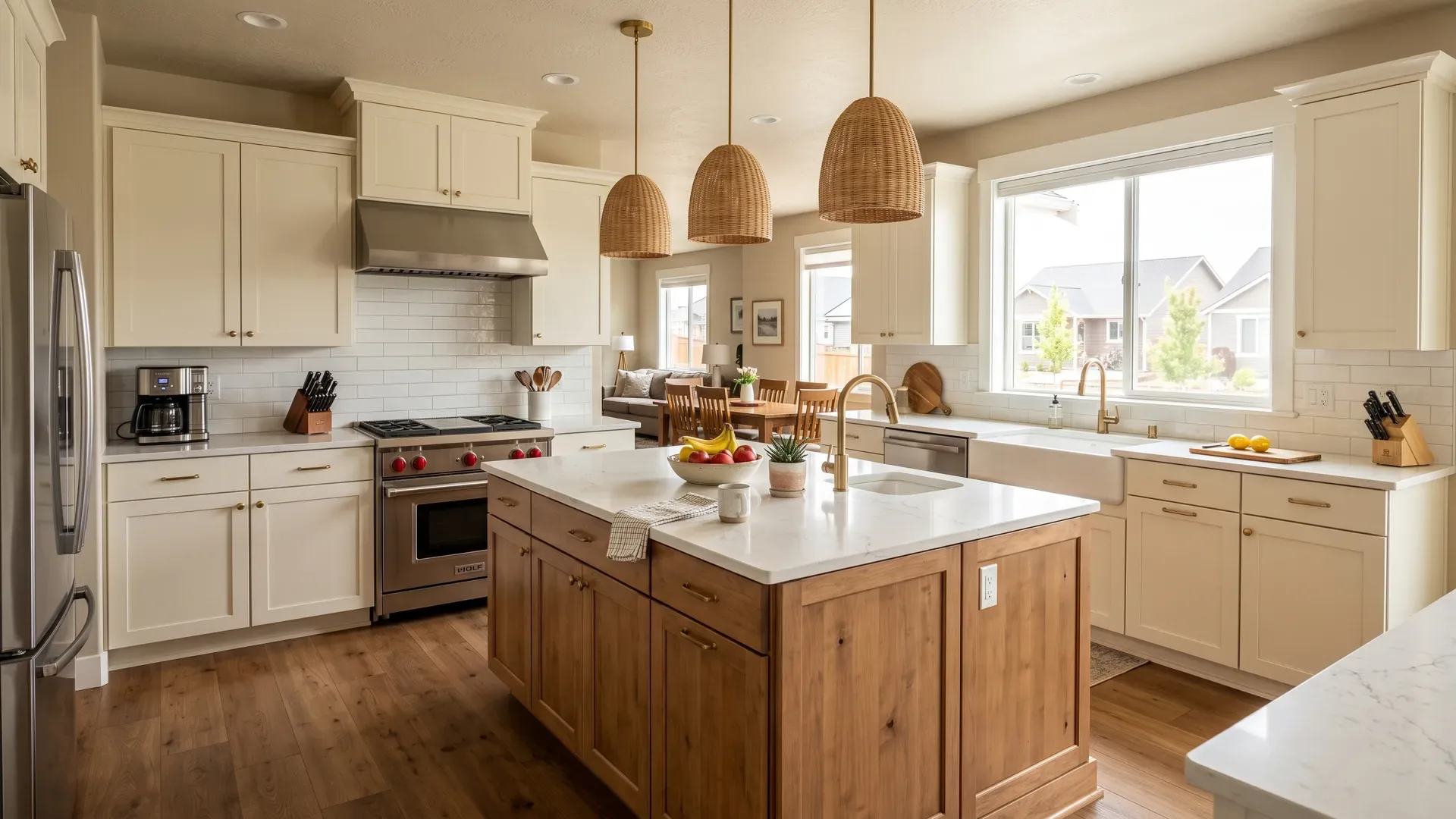
Two-tone kitchen cabinets use two different colors or finishes in one kitchen - most often one color on the perimeter and a second on the island, or upper cabinets in one tone and lowers in another. Done well, it adds depth and personality, grounds the room with a bold anchor color, and lets you use color without committing every cabinet to it. The keys to pulling it off are choosing colors that relate, deciding which surfaces get which tone, and keeping one color neutral so the combination reads intentional rather than busy. Here is how to design a two-tone kitchen that looks designed, not disjointed.
Key takeaways: Two-tone means two finishes in one kitchen - commonly a colored island against a neutral perimeter. Keep one tone neutral, choose colors that relate, and use hardware and counters to tie it together. See colors and finishes or plan your project.
What "two-tone" really means
Tap to expand
What "two-tone" really means
Two-tone simply means intentionally using more than one cabinet color or finish in a single kitchen. It is not random - it is a deliberate design choice that creates contrast and visual interest. The most common approach is a neutral perimeter with a contrasting island, but there are several established patterns, and understanding them helps you pick the one that suits your kitchen. The goal is always the same: use two tones to add depth and a focal point while keeping the overall look cohesive and calm. When the two colors and their placement are chosen with intention, a two-tone kitchen feels custom and layered; when they are chosen carelessly, it can feel like two half-finished kitchens fighting each other.
The most popular two-tone combinations
Tap to expand
The most popular two-tone combinations
A few pairings have become classics because they work. Perimeter and island is the most popular: a neutral perimeter (white, off-white, greige) with a bolder island (navy, green, charcoal, or natural wood) that anchors the room. Uppers and lowers puts a lighter color up top to keep the kitchen feeling open and a darker or bolder color on the base cabinets to ground it. Cabinets and a wood accent pairs painted cabinets with a natural stained-wood island or open shelving for warmth. And a subtler version pairs two closely related neutrals - say, white uppers with greige lowers - for depth without high contrast. Any of these can look beautiful; the right one depends on how bold you want to go.
Choosing colors that work together
Tap to expand
Choosing colors that work together
The secret to a successful two-tone kitchen is that the two colors should relate, not clash. The easiest and most reliable formula is to pair one neutral with one accent: a white, off-white, or greige as the calm base, and a single richer color - navy, forest green, sage, charcoal, or a natural wood tone - as the accent. Keeping one color neutral gives the eye a place to rest and makes even a bold second color feel sophisticated. Avoid pairing two equally strong colors, which tends to look busy and dated quickly. When in doubt, let white or off-white do most of the work and use the second color as the confident accent - that balance almost always reads as designed. Our cabinet colors and finishes guide walks through how each of these tones behaves in real kitchen light.
The best accent colors for a two-tone island
Tap to expand
The best accent colors for a two-tone island
If you have settled on a neutral perimeter and want to choose the accent, a handful of colors have proven themselves over years of kitchens. Navy blue is the runaway favorite - deep, classic, and endlessly flexible with brass, black, or nickel hardware. Forest and hunter green bring a rich, organic warmth that feels current without being trendy. Muted sage is softer and more restful, a favorite for homeowners who want color that whispers rather than shouts. Charcoal and soft black ground a bright kitchen with drama and sophistication. And a natural stained-wood island - white oak, walnut, or a warm mid-brown - adds organic texture against painted perimeter cabinets and bridges beautifully to wood floors. Any of these on an island against a white or off-white perimeter is a safe, timeless choice. Pair your pick with the right pulls from our cabinet hardware guide and the look comes together fast.
Deciding which cabinets get which color
Tap to expand
Deciding which cabinets get which color
Placement matters as much as the colors themselves, and a couple of principles keep it looking right. Lighter colors up high keep a kitchen feeling open and airy, so putting the darker or bolder tone on the lowers or island and the lighter tone on the uppers is a safe, flattering default. The island is the natural home for your accent color because it is a discrete piece that becomes a focal point without overwhelming the room. If you have a lot of upper cabinets, keeping them light prevents the kitchen from feeling top-heavy or closed in. Think about where you want the eye to land - usually the island - and put your boldest color there, letting the rest stay neutral and quiet.
Tying the two tones together
Tap to expand
Tying the two tones together
The elements shared across both cabinet colors are what make a two-tone kitchen feel like one cohesive space rather than two. Using the same hardware finish on both tones is the most important unifier - consistent matte-black, brass, or nickel pulls tie the whole kitchen together. A consistent countertop (or a deliberately coordinated pair) bridges the colors, and a backsplash that relates to both keeps the palette unified. Repeating the accent color elsewhere - in bar stools, lighting, or decor - also helps the second cabinet color feel intentional. These connective details are the difference between a two-tone kitchen that looks layered and custom and one that looks like the budget ran out halfway through.
Why choose two-tone?
Tap to expand
Why choose two-tone?
Two-tone is popular for real, practical reasons beyond looks. It adds depth and interest that a single-color kitchen can lack. It lets you use color confidently - a navy or green island brings personality without the commitment of an entire kitchen in that color, which also ages more safely. It creates a natural focal point, usually the island, that anchors the whole room. And it can visually define zones in an open kitchen, distinguishing the island or a coffee bar from the main run. For many homeowners, two-tone is the sweet spot between a safe all-white kitchen and a bold all-color one - personality with balance.
Common two-tone mistakes to avoid
Tap to expand
Common two-tone mistakes to avoid
A few missteps undo an otherwise good two-tone plan. Pairing two equally bold colors with no neutral to balance them makes the kitchen feel chaotic. Choosing two trendy colors that will both date at once, rather than anchoring with a timeless neutral. Using different hardware on each color, which breaks the visual connection. Putting the dark color on the uppers in a small kitchen, which can make it feel closed in and heavy. And adding a third or fourth finish, which tips "layered" into "busy." Two-tone works best with discipline: two colors, one of them neutral, unified by consistent hardware and counters. Restraint is what makes it look expensive.
Two-tone with mixed materials
Tap to expand
Two-tone with mixed materials
Two-tone does not have to mean two paint colors - some of the most interesting kitchens pair a painted finish with a completely different material. A crisp painted perimeter with a natural wood island brings warmth and texture that two paints cannot. Painted cabinets with a stained-wood range hood or open wood shelving echo the same idea on a smaller scale. Even a subtle mix - matte painted lowers with a lightly textured or rift-cut wood upper accent - adds depth. Because the materials themselves differ, this kind of two-tone reads as layered and custom, and it is a natural fit if you love wood but do not want an entire wood kitchen. The same rules apply: keep one element neutral, and let the wood be the accent that draws the eye. If you are still weighing painted versus natural wood for the accent, our guide to the best wood for kitchen cabinets compares the tones and grains that pair best with painted perimeters.
Will two-tone look dated?
Tap to expand
Will two-tone look dated?
A fair concern with any design choice is longevity, and two-tone ages well when you build it on a timeless foundation. Because one color is neutral, the kitchen has a classic base that will not go out of style, and the accent color - even a bolder one - is contained to the island or lowers, so if tastes change it is a smaller area to repaint than a whole kitchen. Choosing a neutral you love and an accent that leans classic (navy, green, natural wood, and charcoal have all proven durable) rather than of-the-moment keeps a two-tone kitchen looking current for years. The two-tone approach itself is not a fad; it is a long-standing design technique, and grounding it in neutrals is what keeps it timeless.
The bottom line
Tap to expand
The bottom line
Two-tone kitchen cabinets are one of the most effective ways to add depth, personality, and a focal point to a kitchen without the risk of committing every surface to a bold color. The formula that works almost every time is simple: pair one neutral with one accent, put the bolder tone on the island or lowers, keep the lighter tone up high and airy, and tie it all together with consistent hardware and coordinated counters. Do that with a little restraint and you get a kitchen that looks custom, layered, and intentional - the kind of thoughtful design that feels expensive and stays timeless.
Design your two-tone kitchen with Boise Cabinet Co
Tap to expand
Design your two-tone kitchen with Boise Cabinet Co
Boise Cabinet Co designs and builds custom two-tone kitchen cabinets - from a bold navy or sage island against a crisp white perimeter to a warm wood island with painted cabinetry - for homes across Boise, Meridian, Eagle, and Nampa. Explore our colors and finishes, then get a planning range or book a free in-home consultation. We will help you choose colors that relate, place them where they flatter your kitchen, and tie everything together so your two-tone kitchen looks designed, cohesive, and timeless from the day it is installed.